Thursday, April 21, 2011

Renee Fleming to Star in Met Saturday Matinee Broadcast of Strauss' "Capricco" on April 23

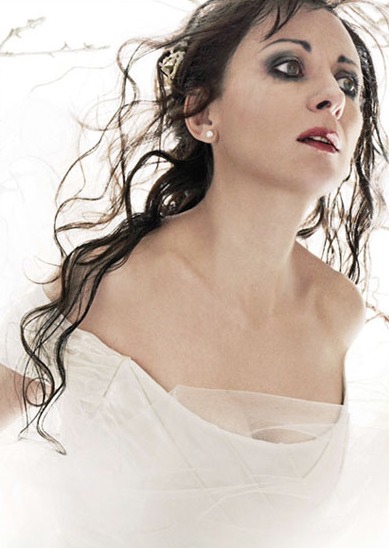
Renee Fleming

St. Louis Public Radio will carry the Met Opera broadcast of Richard Strauss’ Capriccio on their HD channel, KWMU-3 beginning at 12 noon. You may also listen to a live stream of the broadcast. Approximate running time 2 hours, 16 minutes; performed without intermission.

The Met web site says:
On Opening Night of the 2008–09 season, Renée Fleming dazzled audiences when she sang the final scene of Strauss’ wise and worldly meditation on art and life. Now she performs the entire work, in which the composer explores the essence of opera itself. Joseph Kaiser and Sarah Connolly also star, and Andrew Davis conducts.
In a review titled "Words or Music: Why Choose?" in the March 29, 2011, edition of the New York Times, Anthony Tomissini said:
Strauss described Capriccio, with a libretto by the composer and the conductor Clemens Krauss, as a “conversation piece for music.” It is certainly a chatty opera. Countess Madeleine, a young widow who lives in a chateau outside Paris with her brother, the Count, is being courted by the composer Flamand and the poet Olivier. It is her birthday, and for the occasion Flamand has written her a string sextet, and Olivier a sonnet. The love triangle becomes an allegory for an aesthetic debate about whether music or words are more important, on their own terms or when the two arts are combined.

This realistic production by John Cox, introduced in 1998, moves the setting from the 1770s to the 1920s. For this revival, new costumes and décors were designed by Robert Perdziola. The idea of the updating was to make the aesthetic issues seem more pertinent to opera today, and it works, though you have to accept the talk among the characters about their reactions to the latest opera by Gluck.

For the Countess, being courted by two artistic men is both flattering and threatening. There is no reason to choose between words and music. But between her two suitors she must make a choice. Confronted by their ardor, she realizes how arbitrary such important choices are.

The opera is presented here without a break, as Strauss intended it, lasting about 2 hours 20 minutes. The Countess is onstage almost the entire time. Ms. Fleming, looking radiant, brought verbal crispness and coy charm to the Countess’s conversational singing but grabbed every chance to let her voice bloom in the fleeting melodic bits.
The High Definition transmission of Capricco will be presented at AMC Esquire 7, 6706 Clayton Road; St. Louis Mills 18; 5555 Saint Louis Mills Boulevard; AMC Chesterfield 14, 3000 Chesterfield Mall; and AMC Showplace Edwardsville 13, 6333 Center Grove Road, Edwardsville, Illinois. Click here to buy tickets.

Wednesday, April 13, 2011

Alban Berg's "Wozzeck" Met Saturday Matinee Broadcast on April 16

Alan Held and Waltraud Meier
(AP Photo/Metropolitan Opera, Cory Weaver)

St. Louis Public Radio will carry the Met Opera broadcast of Alban Berg’s Wozzeck on their HD channel, KWMU-3 beginning at 12 noon. Approximate running time 1 hour, 40 minutes; performed without intermission.

The Met web site says: "James Levine interprets Berg’s masterpiece. Alan Held sings the title role and Waltraud Meier brings her interpretation of Marie to the Met for the first time."

Anthony Tommasini writes in the April 7 New York Times:
Mr. Levine’s continuing health problems, primarily chronic back pain, compelled him last month to cancel the rest of his performances this season with the Boston Symphony Orchestra and to give his notice of resignation as its music director. And he curtailed his spring schedule at the Met.

Mr. Levine made it a priority to conduct Wozzeck, a work he reveres and has performed stunningly over the years, the last time in the 2005-6 season. But I never heard him give a better account of this harrowing, deeply moving opera than this one. Mr. Levine must still be coping with back pain; he did not make it to the stage at the end for bows. Instead he simply waved to the audience from the pit.

On the podium, though, sitting in his conductor’s chair with his arms flailing, he seemed inspired. Could the extra urgency and sweep on this occasion, and tempos slightly faster than those I remember from his earlier performances, have been motivated by a determination to prove that he was still a dynamic maestro? Whatever the cause, the results were thrilling.

Mr. Levine still drew plenty of depth, spaciousness and glow from the orchestra during the despairing passages of Berg’s gravely beautiful atonal score, first performed in Berlin in 1925. But his work had greater overall shape and more prickly energy on this night than in years past. Played without breaks, Wozzeck lasts just 1 hour, 40 minutes. The time passed without notice; the score has seldom seemed so compact and inexorable.

Friday, April 8, 2011

Rossini's "Le Comte Ory" Met Saturday Matinee Broadcast and High Definition Transmission on Saturday, April 9

St. Louis Public Radio will carry the Met Opera broadcast of Gioacchino Rossini’s Le Comte Ory on their HD channel, KWMU-3 beginning at 12 noon. Approximate running time 2 hours, 45 minutes.

The Met web site says:
Rossini’s vocally dazzling comedy soars with bel canto sensation Juan Diego Flórez in the title role of this Met premiere production. He vies with mezzo-soprano Joyce DiDonato, in the trouser role of Isolier, for the love of the lonely Countess Adèle, sung by soprano Diana Damrau. Bartlett Sher, director of the Met’s popular productions of Il Barbiere di Siviglia and Les Contes d’Hoffmann, describes the world of Le Comte Ory as, “a place where love is dangerous. People get hurt. That can be very funny and very painful. Rossini captures both -— with the most beautiful love music he ever wrote.”
The High Definition transmission of Le Comte Ory will be presented at AMC Esquire 7, 6706 Clayton Road; St. Louis Mills 18; 5555 Saint Louis Mills Boulevard; AMC Chesterfield 14, 3000 Chesterfield Mall; and AMC Showplace Edwardsville 13, 6333 Center Grove Road, Edwardsville, Illinois. Click here to buy tickets.

In an article titled "Whose Version of Rossini? Scholar Disagrees With the Met" in the April 8, 2011, New York Times, Anthony Tommasini reports on a controversy surrounding the new production of Le Comte Ory:
The scholar and editor Philip Gossett is an expert on early-19th-century Italian opera, particularly the works of Verdi and Rossini. So naturally, the Metropolitan Opera asked him to write program notes for its premiere production of Rossini’s penultimate opera and last comedy, Le Comte Ory, which will be carried live on Saturday in an HD transmission to movie theaters and on the Met’s radio network.

Mr. Gossett refused. He did not want to be associated with the Met production, and he has not been reticent about explaining why.

He strongly objected to the Met’s decision to use the standard edition of the opera, prepared by Eugène-Théodore Troupenas and published in 1828, the year Ory received its premiere at the Paris Opera. Mr. Gossett considers this a butchered edition, seemingly intended for a “provincial opera house that couldn’t perform the music Rossini wrote,” as he explained in an essay for Das Bärenreiter-Magazin.

Wednesday, March 23, 2011

Wagner's "Das Rheingold" Met Saturday Matinee Broadcast on April 2


St. Louis Public Radio will carry the Met Opera broadcast of Richard Wagner’s Das Rheingold on their HD channel, KWMU-3 beginning at 12 noon. Approximate running time 2 hours, 45 minutes.

The Met web site says:
Two unparalleled artists join forces to create a groundbreaking new Ring for the Met: Maestro James Levine and director Robert Lepage. “The Ring is not just a story or a series of operas, it’s a cosmos,” says Lepage (La Damnation de Faust), who brings cutting-edge technology and his own visionary imagination to the world’s greatest theatrical journey. Bryn Terfel (pictured above), singing his first, much-anticipated Met Wotan, leads the cast in Das Rheingold, the Ring’s first installment. Levine, who has conducted every complete cycle of Wagner’s masterpiece performed by the Met since 1989, says, “The Ring is one of those works of art that you think you know, but every time you return to it, you find all kinds of brilliant moments that hadn’t struck you with the same force before.” “The Ring is about change,” director Lepage says. “I try to be extremely respectful of Wagner’s storytelling, but in a very modern context. We’re trying to see how in our day and age we can tell this classical story in the most complete way.”

Friday, March 18, 2011

Natalie Dessay Stars in "Lucia di Lammermoor" on Saturday, March 19, Met Matinee Broadcast


St. Louis Public Radio will carry the Met Opera broadcast of Gaetano Donizetti’s Lucia di Lammermoor on their HD channel, KWMU-3 beginning at 12 noon. Approximate running time 3 hours, 40 minutes, with intermissions at approximately 12:40 p.m. and 2:00 p.m.

The Met web site says, "Natalie Dessay returns to her triumphant portrayal of the fragile heroine in the Met’s hit production. Also starring Joseph Calleja."

Zachary Woolfe writes in the the New York Times:
In this revival of Mary Zimmerman’s grayly atmospheric production, there is an empty space where Lucia ought to be. Not that there’s not a soprano onstage, and a redoubtable one, in Ms. Dessay, returning to the company after a two-year absence. Her cool voice has thinned a bit, but it still impresses in coloratura and rises to the score’s climactic moments. The issue is not the voice so much as what that voice should serve: the character.

Ms. Dessay and Ms. Zimmerman have clearly, carefully considered every motion (the soprano’s physical performance Thursday was essentially identical to the one she gave in 2007, when the production was new) and the result is a Lucia almost entirely blank. The main consideration seems to have been avoiding going over the top, being too “operatic.” But in this version, Lucia —- that supremely expressive Romantic character, the one who weeps, swoons, trembles and is often, as the libretto describes, simply “beside herself with misery and fear” in a work dominated by passions and blood —- is so internal that the audience perceives her only as indifferent and detached.

Friday, March 11, 2011

Mascagni's "Cavalleria Rusticana" Opens This Weekend

Winter Opera St. Louis continues its season this weekend with Pietro Mascagni's Cavalleria Rusticana. Witness the passionate Sicilian drama of Santuzza, who is betrayed by her lover Turiddu. Soaring choruses, heartrending arias, dramatic duets and a famous orchestral Intermezzo are just a few reasons to see this masterpiece which ushered in the operatic genre of verismo.

Soprano Sarah Price, recent winner of the St. Louis District Metropolitan Opera Auditions, sings Santuzza. Tenor Gary Seydell, last seen as Canio in I Pagliacci, returns to sing the role of Turiddu. Baritone Eric McCluskey sings the role of Alfio. Mezzo-soprano Elizabeth Petillot sings the role of Mamma Lucia. Recently seen as Flora in La Traviata, Soprano Sarah Gottman sings the role of Lola.

Ms. Price, Mr. McCluskey and Ms. Petillot all make their Winter Opera Debut.

Performances take place at St. Ambrose Church on the Hill (5130 Wilson Ave) this weekend: Saturday March 12th at 8pm and Sunday, March 13th at 5pm.

Tickets are available for $30, $25 and $20. Dinner packages available from Dominic's Restaurant. To purchase tickets, dinner packages and more, call 314.865.0038 or visit http://www.winteroperastl.org/

Thursday, March 10, 2011

René Pape Stars in "Boris Godunov" on Met Saturday Matinee Broadcast March 12


St. Louis Public Radio will carry the Met Opera broadcast of Modest Mussorgsky’s Boris Godunov on their HD channel, KWMU-3 beginning at 11 a.m. Please note the earlier than usual start time. Approximate running time 4 hours, 15 minutes, with intermissions at approximately 12:45 p.m. and 2:00 p.m.

The Met Opera website says:
Bass René Pape takes on one of the greatest roles in a production by Stephen Wadsworth. Valery Gergiev conducts Mussorgsky’s soulful spectacle, which captures the suffering and ambition of a nation. Aleksandrs Antonenko, Vladimir Ognovenko, and Ekaterina Semenchuk lead the huge cast in a work that is also a breathtaking showcase for the Met’s formidable chorus.